Average Reviews:

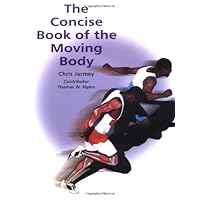
(More customer reviews)Jarmey's book investigates classiscal human musculoskeletal anatomy from a functional perspective: how do our bones, ligaments, tendons, and muscles work when we're standing still and moving? Jarmey's final chapter addresses our fascia -- the bags that wrap our muscles. Concepts such as passive and active insufficiency -- limitations to fully functional movement which are in few anatomy texts -- are discussed here. Such discussions take this book beyond a well-written and well-illustrated text -- they make it highly pertinent and practical.
The final chapter was written by Thomas Myers. Those 20 or so pages present a highly condensed version of his groundbreaking text, "Anatomy Trains." Myers discusses tensegrity and the application of this alternate means of creating structure to our musculoskeletal systems. The final two pages very briefly discuss practical applicaions and larger considerations of this whole-systems approach to understanding our bodies. Heady stuff!
It is very interesting to have these two complementary-but-distinct discussions in one book. Jarmey discusses a "levers and hinges" interpretaion; Myers presents an alternate model. Readers have the benefit of seeing both.
This is a great book for civilians -- non-medical professionals -- to learn human anatomy. It will also give those people a brief taste of the world of tensegrity pioneers Myers/Levin/Flemons/Ingber. As far as I can tell, this is one of the most fascinating and underappreciated areas in all of science; Myers presents links to investigate that world. If you find Mr. Myers's words here interesting, I strongly recommend checking out his "Anatomy Trains."
Enjoy!
--phil
Click Here to see more reviews about: The Concise Book of the Moving Body
A condensed version of the author's The Atlas of Musculo-skeletal Anatomy, this book is aimed at students and the general reader. The first seven chapters explain anatomical orientation, tissues, bone, the axial and appendicular skeletons, joints, and skeletal muscle and fascia. In the book's final chapters, the muscle groups of the body's four major regions are amply illustrated, with composite drawings detailing each region's deep and superficial muscles in both anterior and posterior views. Color tables show each muscle's origin, insertion, innervation, and action.
 Get 33% OFF
Click here for more information about The Concise Book of the Moving Body

No comments:
Post a Comment