Average Reviews:

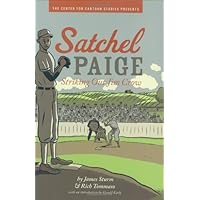
(More customer reviews)Graphic novel biographies are touch-and-go affairs. For example, Houdini: The Handcuff King by Jason Lutes and Nick Bertozzi did little for me. I could see what the creators were trying to do, but taking a single selection out of Houdini's life and then making it directly into a comic book without any flashbacks, cuts, or original takes on his life... well, what's the point really? If you can't get creative with your subject when you're making a graphic novel out of their life then you may as well just create a plain old piece of non-fiction and be done with it. You need to do something to deserve your graphic format. In this way, Lutes and Bertozzi could take a page out of the book of James Sturm and Rich Tommaso, then. "Satchel Paige: Striking Out Jim Crow" can't be called anything but entirely thrilling. By telling Paige's stories through another man's eyes, the reader is given a fuller understanding of the times in which blacks lived during the height of Jim Crow. A graphic novel bio done right.
Our unnamed hero decides in 1929 to support his family by becoming a professional baseball player. It might have worked out too had he not played early on against the great Satchel Paige and busted his knee. Now he works as a sharecropper in the deep South and times are hard. His son is beaten by the white landowners for going to school rather than working their fields and there's little to be done about it. Then, one day, Satchel Paige is advertised as coming to play the local white baseball team and everyone turns out. At first Paige doesn't show and the game grows tense. Yet by the end of the day Paige's eventual presence causes an outpouring of support from all sides and colors. In the midst of all this, the narrator decides to finally tell his son about his baseball days and remind his child that he still has options.
The idea of placing Paige within the context of his times by narrating through someone else is inspired and probably why the book works as well as it does. The fictional sharecropper who tells his own story first and how Paige intersected with it second, is a great character because you can feel the reality of his situation. The danger of writing any book for children that discusses Jim Crow is that your author is going to dumb down the material. Make light of the horror of the time, even. Sturm is very clever in this respect. He drills home both the constant threat of violence present at the time alongside the beating down of the spirit. When the sharecropper's son goes to school instead of helping in the fields a horrific segment brings these horrors together. As for illustrator Rich Tommaso, he doesn't have to show any more that the simplest of images to complement these moments. You might hear about a "cotton sack tied around his head. Blood leakin' through the sack," but the next panels are just of the boy's mother boiling water quietly and carefully. Against this backdrop, Paige's appearance is as welcome to the characters as it is the readers. And a book that can elicit a direct connection between character and reader has done its job and done it well.
Baseball, it seems, is the sport with the best narrative potential. Now I don't mean to belittle football, basketball, or any of those other nice games, but in baseball you've a constant heightening of narrative tension. That's why stories about baseball players work so well. When you see those nasty Jennings brothers out there facing Satchel Paige, you want nothing short of blood. In lieu of blood, strikeouts will have to do, and boy do they ever! Even kids unfamiliar or uninterested in the game itself will be drawn deeply into Sturm and Tommaso's recaps. I suppose that for a kid reading this book there might be some mild confusion over whether or not we're supposed to root for Paige initially. After all, our narrator does bust his knee in the process of playing against Paige. Still, the spirit of competition should never be confused with good vs. evil. The book makes that much apparent.
It's clear that ample research was done on this book, particularly when you consider the authenticity of the narrator's life. The back of the book is filled too with "Panel Discussions" which lift select images from the book's panels and give a little historical background to things like the African American press, barnstorming, and lynching, to name but a few. The rest of the book just feels right. Not like a current author trying to shoehorn himself into a historical record, but like the words were tripping out of the narrator's mouth directly into your ear. With its misleadingly simple images and deep vein of authenticity, "Satchel Paige: Striking Out Jim Crow" comes across as a biography of necessity. It's not a replacement for those other bios with their focus centered squarely on the hero in question, but rather as a perfect complement. Anyone can learn a fact or two about Satchel Paige. How much rarer it is to feel firsthand why it is that people considered his existence extraordinary. Beautiful, harsh, and real.
Click Here to see more reviews about: Satchel Paige: Striking Out Jim Crow
Baseball Hall of Famer Leroy "Satchel" Paige (1905? - 1982) changed the face of the game in a career that spanned five decades. Much has been written about this larger-than-life pitcher, but when it comes to Paige, fact does not easily separate from fiction. He made a point of writing his own history'and then re-writing it. A tall, lanky fireballer, he was arguably the Negro League's hardest thrower, most entertaining storyteller and greatest gate attraction. Now the Center for Cartoon Studies turns a graphic novelist's eye to Paige's story. Told from the point of view of a sharecropper, this compelling narrative follows Paige from game to game as he travels throughout the segregated South.In stark prose and powerful graphics, author and artist share the story of a sports hero, role model, consummate showman, and era-defining American.
 Get 25% OFF
Click here for more information about Satchel Paige: Striking Out Jim Crow

No comments:
Post a Comment