Average Reviews:

(More customer reviews)It's not a *bad* book about stretching, and does contain some 200 exercises--even if half of them are about as complex as 'lace your fingers together, palms out, and push your hands away from your body' (my paraphrase).
What really bothers me, though, is a pair of problems:
First, the book mentions almost casually that static stretching (touch your toes and hold the position) has almost no correlation with functional stretching (how high can you side kick?). In the next paragraph it states quite clearly that martial artists should be focused on improving functional stretching--that static stretching is largely useless except for rehabilitation.
Now, even if that *isn't* poppycock--which I'm not qualified to judge, but it does sound flaky--one would think that this book, intended for martial artists, would therefore proceed to focus on other kinds of stretching. No: the vast majority of the exercises are static stretches. So either the advice is flawed or the book's target audience is wrong.
A second issue is PNF stretching. The book goes to some effort to push PNF as the most effective, best stretching technique: over and over, the refrain is that one should work towards incorporating PNF stretching into your workout as soon as is feasible (it's not for beginners).
But just as soon as you've become convinced of the benefits of PNF stretching, the book goes on to state--and here I'll quote--"Because PNF stretching requires detailed hands-on instruction and guidance, PNF stretching variations are not included in the exercise descriptions". In other words, the book says pretty clearly, "This is what you want, and this book doesn't describe it."
I'm disappointed that I bought this book, and can't say I'd recommend it to others.
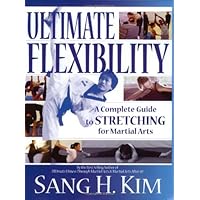
Click Here to see more reviews about: Ultimate Flexibility: A Complete Guide to Stretching for Martial Arts
 Get 32% OFF
No comments:
Post a Comment